I drifted in and out of voices, monitors, footsteps. Ethan was there—my husband—holding my hand like it was the only thing keeping me in the world.
When I woke, his eyes were red.
“She’s alive,” he said softly. “She’s small, but she’s fighting.”
Our daughter had arrived too early, but she had arrived.
And for the first time that night, I cried for something other than pain.
I cried because she had survived a room that tried to erase both of us.
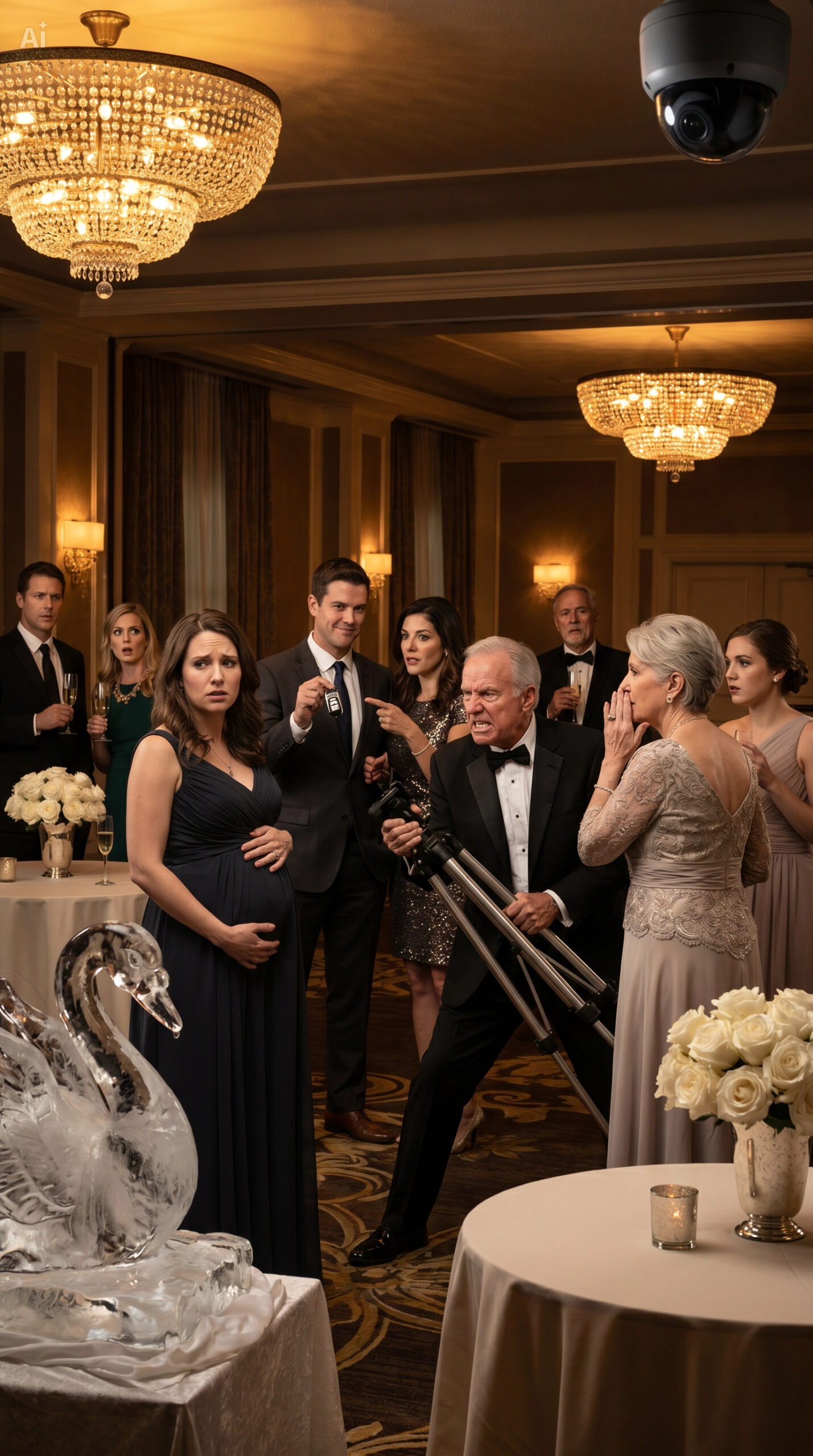
By morning, the footage existed. Security cameras. Witnesses. The videographer’s recording. The truth, finally, in a form no one could rewrite.
But my family still tried.
Calls came before I could even sit up properly.
“Let’s handle this privately.”
“We’re family, Deborah.”
“Don’t destroy your brother’s future.”
My parents’ lawyers arrived with calm voices and careful phrases, as if violence could be negotiated into misunderstanding.
Ethan looked at me but didn’t tell me what to do.
Neither did anyone else.
A prosecutor came in later that day. He spoke gently, like the truth might break me again.
“Are you ready to proceed?” he asked.
I looked past him, through the hospital glass, toward the NICU where my daughter was learning how to breathe without the world collapsing around her.
Then I looked back.
“No private meetings,” I said quietly. “No forgiveness deals. No family exceptions.”
My voice was weak—but it didn’t shake.
“Press every charge.”
The room went silent in a different way than the ballroom had.
Not stunned.
Not confused.
Final.
And for the first time in my life, I didn’t try to earn my family’s love.
I chose instead to protect the one person who would never make me beg for it.