Part 1: The Stranger at the Gate
The security camera alerted me at 2:17 in the morning.
At my age, I understood the difference between real rest and simply closing your eyes while waiting for the next problem to arrive. Men like me never truly sleep deeply. We listen for unusual sounds, unfamiliar engines, and silence where something should be heard.
The monitor beside my bed glowed blue.
North gate. Unknown vehicle. Lights off.
My name is Callan Mercer, and I run Red Mesa Training Group on a remote stretch of desert in southern New Mexico. Officially, we train executives and security teams in crisis response, defensive driving, evacuation procedures, and protective operations.
But the real lesson I teach is judgment.
“Anyone can panic when they have power in their hands,” I always tell my students. “The difficult part is staying human when anger tells you to become something else.”
That night, I forgot my own advice for a few seconds.
The vehicle sat fifty yards outside the fence line, angled strangely in the gravel. Kentucky plates. Cracked windshield. One broken taillight.
No call.
No explanation.
No attempt to leave.
Everything about it felt wrong.
I dressed quickly, grabbed my jacket, and left through the side entrance without waking the guard. The desert air smelled of dust and dry brush. The moon cut sharp shadows across the mountains.
I approached the sedan carefully.
A person who owns a training facility does not casually walk toward a suspicious vehicle in the middle of the night.
The driver’s door opened before I reached it.
Someone fell out.
Not stepped.
Fell.
A young woman hit the gravel on one knee, catching herself with both hands. The sound she made was quiet, but the pain behind it was impossible to miss.
At first, I only saw tangled dark hair.
Then she lifted her face toward the moonlight.
“Dad.”
Everything inside me stopped.
“Juniper?”
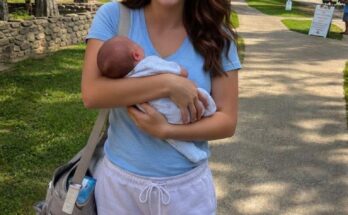
My daughter tried to stand, but she was barely holding herself together. One arm pressed tightly against her ribs. One eye was swollen. Her lip was split. Dark bruises covered both arms in the unmistakable shape of someone else’s hands.
She was seventeen years old.
And she had driven nearly fourteen hundred miles to find me.
I reached her just before she collapsed.
“Please,” she whispered. “Don’t call Mom.”
I had heard fear in many voices throughout my life.
But I had never heard it like that.
So I didn’t call her mother.
I lifted Juniper into my arms like she was still the little girl who used to run barefoot by the lake, like I had not spent years losing pieces of her childhood through custody battles, distance, and a woman who knew exactly how to make me powerless.
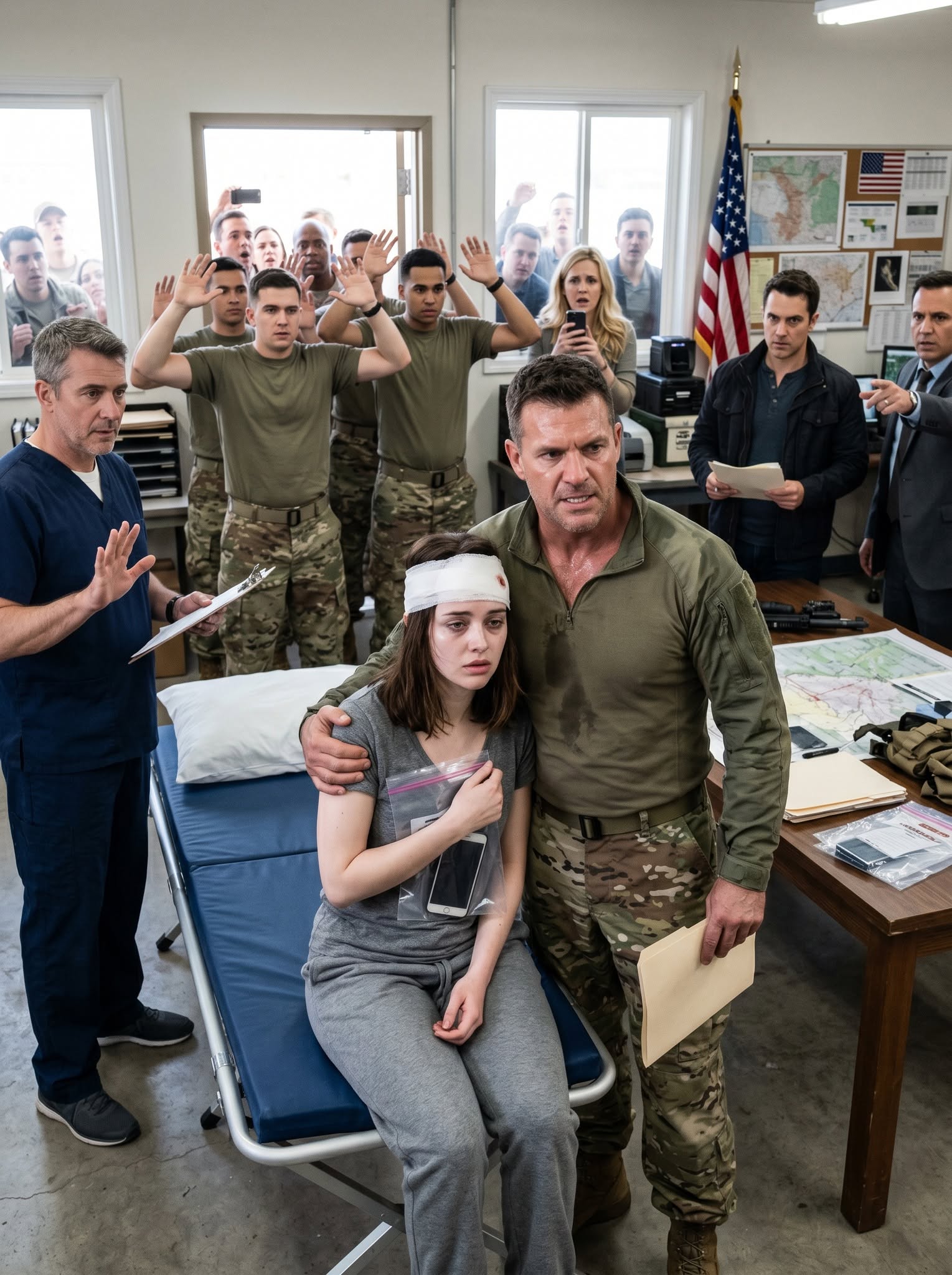
I carried her into the gatehouse.
The bright lights made everything clearer.
The darkness had allowed me to hope it wasn’t as bad as it looked.
The light removed that illusion.
Possible broken ribs.
Bruising along her jaw.
A mark on her wrist.
Scratches around her neck.
A swollen cheek.
I placed her carefully on the bench and forced myself to breathe.
Then I asked the only question that mattered.
“Who did this?”
Juniper looked at me with her one clear eye.
And whatever she was about to say would change everything.
Part 2: The Name Behind the Fear
Juniper looked at me with the one eye she could still open.
For a brief moment, I didn’t see the injured teenager in front of me.
I saw the little girl who once stood in my kitchen holding a broken snow globe, trying desperately not to cry because she thought I would be angry.
Then she reached into her coat and pulled out a cheap prepaid phone wrapped inside a plastic grocery bag.
“There were eleven of them,” she whispered. “They recorded everything.”
The room suddenly felt smaller.
There was only the phone in her hand, the fear in her eyes, and the faint buzzing of the fluorescent lights above us.
“Who?” I asked.
Juniper swallowed.
“The Harrows.”
The name hit me instantly.
I knew that family.
The Harrows were connected to Juniper’s mother’s new life—not through blood, but through marriage, loyalty, silence, and fear. They lived in eastern Kentucky, in a place where everyone knew their trucks, their businesses, their church connections, their hunting land, and the favors they could call in.
Her mother, Mireya, married Vance Harrow when Juniper was ten.
Vance always appeared respectable. Perfect clothes. Perfect manners. A smile that lasted just long enough to hide what was underneath.
His father, Orson Harrow, was the kind of man who controlled a room without needing a title. Everyone listened when he spoke.
I had met Orson twice.
Both times, something inside me warned me to be careful.
“Family handles its own,” he once told me during a casual dinner.
At the time, I should have taken Juniper and walked away.
I didn’t.
I followed the custody agreement.
That was my first mistake.
I took the phone from Juniper and placed it face down on the counter.
She stared at it nervously.
“You’re not going to watch it?”
“Not tonight.”
“But you need to know what they did.”
“I know enough to keep you safe,” I said. “The rest comes later, when it can actually help us.”
She looked confused.
She had driven across multiple states expecting anger. She expected me to explode.
But anger would have been easy.
Anger would have made me reckless.
My daughter did not need revenge.
She needed someone thinking clearly.
I called Ellis, our medic, and asked him to come to the gatehouse with emergency supplies.
Then I held Juniper’s freezing hand.
“You made it here,” I told her. “That means they don’t get control over your life anymore.”
Outside, the abandoned sedan slowly cooled in the darkness.
Inside, my daughter finally leaned against my shoulder.
But she did not cry.
Not until Ellis arrived and gently asked her name.
The moment she answered, everything she had been holding inside finally broke.
And the sound of her pain changed the direction of my entire life.Part 3: The Truth Begins to Surface
By sunrise, the desert was covered in pale gold light.
Juniper slept inside the infirmary, her ribs wrapped, my jacket folded beneath her head like a pillow. I sat outside her door on a metal chair, elbows resting on my knees, holding a cup of coffee that had gone cold hours ago.
Around me, Red Mesa slowly came alive.
Vehicles started.
Voices echoed near the barracks.
Equipment shifted inside the storage buildings.
But I stayed still.
My entire focus was on the room behind that door.
At 6:40, Ellis stepped outside with his hands in his pockets.
“She needs a hospital,” he said.
“How bad?”
“Bad enough that I’m telling you she needs one. Not bad enough that I have to drag you there myself.”
“Police report?”
Ellis glanced toward the infirmary.
“Eventually. But not local authorities. Not anyone connected to where she came from. Not until she feels safe enough to speak.”
I nodded.
Ellis had worked beside me for six years. He understood when silence was better than advice.
“Did she say anything else?”
“Only pieces.”
“Tell me.”
He hesitated.
I looked up.
That was enough.
“There was a barn,” Ellis said quietly. “Cameras everywhere. A group of relatives and several other men. She said it started after she discovered something she wasn’t supposed to find.”
He paused.
“Her stepfather was there. Watching from the doorway.”
The coffee cup crushed slightly in my hand before I realized I was squeezing it.
Hot liquid spilled across my fingers.
I felt the burn.
I registered it.
Then I carefully placed the cup down.
Ellis watched me closely.
Not with fear.
With concern.
“Callan.”
“I’m here.”
“No,” he said. “I mean really here. Stay in control.”
A small smile almost reached my face.
That was why I trusted Ellis.
Not because he lacked fear.
Fearless people were dangerous.
Ellis was valuable because he could stand beside a father whose daughter had arrived broken and still say what needed to be said.
“I’ll stay useful,” I told him.
He nodded.
“Good.”
Near noon, Juniper woke.
I was sitting beside her bed pretending to read a maintenance report. I had not turned a page in nearly an hour.
Her eye opened slowly.
For a few seconds, confusion crossed her face. She looked around at the white walls, the small window, the medical equipment, and the desert outside.
Then she saw me.
And she remembered.
Her expression changed.
“Mom called?”
“No.”
“Don’t let her know I’m here.”
“I won’t.”
“She’ll make me go back.”
I leaned closer.
“No one is taking you anywhere you don’t choose to go.”
For the first time since she arrived, some of the fear in her face began to fade.
Part 4: Following the Money
The first thing we uncovered was money.
It almost always starts there.
Families like the Harrows wrapped their power in words like loyalty, tradition, faith, and family. But behind those words, there was always something practical hiding underneath—payments, favors, contracts, property deals, or money moving through places where nobody thought to look.
I divided my team into groups.
Sloane and Rafael handled public records. They searched county contracts, property transfers, tax records, business registrations, nonprofit filings, and government agreements. They worked for hours with laptops, notebooks, and endless cups of energy drinks.
Corruption looked mysterious from the outside.
But once placed into a spreadsheet, it became a pattern.
Meanwhile, Ivo and Mei analyzed financial connections.
I made one rule clear.
“No breaking into systems. No illegal access. If we have to force our way in, we’re already collecting evidence the wrong way.”
They used only information that could legally be obtained—public archives, business records, old reports, online registrations, court documents, and careless social media posts.
The Harrows were careful with their crimes.
But they were careless with their ego.
And pride always leaves traces.
By lunchtime, we found the public image they had built.
Harrow Ridge Youth Recovery.
A wilderness program for troubled teenagers.
It had county funding, church donations, and state reimbursements. The website showed smiling teenagers hiking through forests. The testimonials talked about discipline, responsibility, and family values.
I read those words again.
Family values.
They felt almost insulting.
By the afternoon, Sloane found the first weakness.
One teenager featured in their success stories had also appeared on a missing-person discussion forum under another name. He was not officially missing anymore, but his family had spent years trying to locate him after he left the program.
Then Rafael uncovered two civil complaints that had disappeared after witnesses suddenly withdrew.
Mei discovered connections between three companies tied to recording equipment, payment services, and a private membership website.
The website avoided obvious language.
Instead, it used phrases designed to make cruelty sound respectable.
“Exclusive discipline events.”
“Real consequence experiences.”
“No actors.”
I stood behind Mei’s chair, reading the pages silently.
“Preserve everything,” I said.
She looked up.
“Screenshots. Dates. Source records. Verification details. Everything. Assume someone will challenge every piece of evidence.”
She nodded and continued working.
That was how real investigations were built.
Not with anger.
With patience.
Later that evening, Rowan entered my office carrying a printed article.
“Another name,” he said.
The article was about Deacon Pryce, a Kentucky State Police investigator who had once spoken publicly about organized fraud and problems connected to youth programs in the county.
Three years earlier, he had tried to investigate.
Then the issue disappeared.
“Someone tried before,” Rowan said.
“Maybe he can try again.”
“Or maybe he was pressured.”
“Then we find out without giving him enough information to hurt us.”
That night, I sat beside Juniper while she slowly ate soup in the mess hall.
She looked different after cleaning up. Her hair was braided away from her face. The swelling around her eye had started fading, but the injuries still reminded me how young she was.
“Are you doing something?” she asked.
“Yes.”
Her spoon stopped.
“Are you going after them?”
“No.”
“Are your people going there?”
“No one is going to the Harrows.”
She studied me carefully.
Children who grow up between two homes learn how to hear what people avoid saying.
“Then what are you doing?”
“Making sure the right people learn the truth. In a way they can’t ignore.”
Her expression tightened.
“They’ll get away with it.”
“No.”
“You don’t know that.”
“I know what I do best.”
Her eye filled with tears.
“Dad, they control everyone there.”
I leaned closer.
“Then we don’t fight them in their town.”
She looked confused.
“When bad people control a small room,” I explained, “you don’t argue inside that room. You remove the walls.”
Juniper looked down.
“Cressa is still there.”
“I know.”
“She helped me.”
“I know.”
“They’ll know.”
That was the fear I had been waiting for.
“We’re finding a way to get her out before everything comes down.”
Juniper looked at me.
“Can you do it?”
“I can try.”
“That’s not enough.”
The words sounded exactly like something I would say.
I nodded.
“No. It isn’t.”
At 11:00 that night, the first package reached Deacon Pryce through a secure legal channel.
There were no accusations.
No emotional speeches.
No angry father demanding revenge.
Only documents.
Archived pages.
Financial records.
Contract information.
And one question on the cover:
How many children disappeared after being sent to Harrow Ridge Youth Recovery?
Before midnight, the same information reached federal investigators.
A smaller version went to three journalists known for protecting victims instead of chasing headlines.
By morning, the first cracks appeared in the Harrow empire.
Then Juniper’s phone received a message from a borrowed number.
It was from Cressa Harrow.
“They know someone helped you.”
Part 5: The Hardest Decision
The hardest thing I did during those days was nothing.
Not because we were inactive.
Red Mesa became a quiet operation center. Printers ran nonstop. Whiteboards filled with timelines and connections. Students worked through documents in shifts, sleeping briefly between reviews. Rowan checked every file before it was sent, making sure we protected victims and followed legal procedures. Ellis kept Juniper away from the evidence screens, which was difficult because she had inherited both my stubbornness and my distrust of being kept in the dark.
But personally, I stayed still.
I did not drive east.
I did not confront Vance Harrow.
I did not send anyone to threaten him.
I did not give my anger a chance to ruin everything we were building.
I repeated the same rule until everyone knew it by heart.
“We are not becoming the story,” I told them. “We are building the story so carefully that the people responsible cannot escape it.”
Then Cressa stopped responding.
Juniper called the borrowed number again and again. Every attempt went straight to voicemail.
By noon, she was sitting upright in the infirmary bed, determination replacing fear.
“I’m going back.”