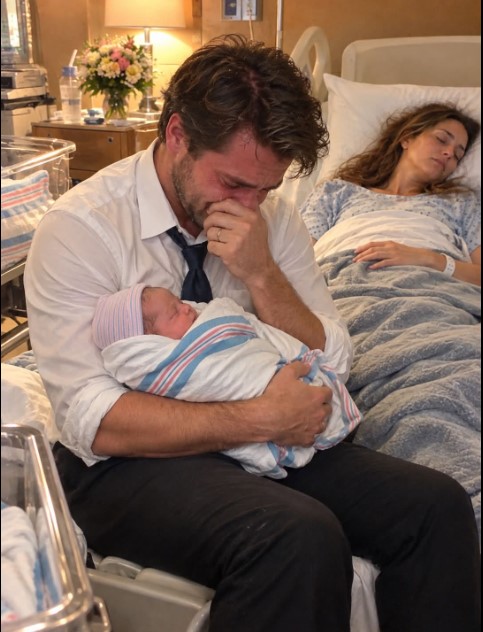
My name is Colin Parker, and I live in a working-class neighborhood just outside Columbus, Ohio. I work as a warehouse supervisor for a construction supply company, and my wife Jenna was the kindest person I had ever known.
She thanked cashiers who barely noticed her, apologized whenever strangers bumped into her shopping cart, and somehow made our modest rental house feel warmer and safer than it had any right to feel.
Seven days before my entire world fell apart, she gave birth to our first child, a little boy we named Wesley.
The morning I held him in the hospital, wrapped in a white blanket with a tiny blue cap slipping over one ear, I genuinely believed life had finally given us something pure and beautiful after years of struggle.
Four days after Jenna came home from the hospital, my office called with an emergency.
Another branch had serious paperwork problems involving missing inventory, a supplier threatening legal action, and documents carrying my signature.
My manager begged me to come and resolve it, promising it would only take four days and warning me the company could lose an important account if I declined.
I told him my wife had only recently given birth and my baby was not even a week old yet, but eventually I agreed to go anyway.
That decision will haunt me for the rest of my life.
Before leaving, I stood in the kitchen with my mother Diane and my younger sister Brooke while Jenna slept down the hallway with Wesley beside her.
The house held a faint scent of dish soap, and the dryer hummed softly in the laundry room while I carefully explained everything.
“Please take care of her,” I said. “The doctors said she needs rest, fluids, warm meals, and help with the baby.”
My mother softly touched my cheek, almost as if I were still a small boy.
“Colin, she’s family now,” she assured me. “Go do your job. Your wife and your son will be perfectly safe here.”
Brooke grinned as she raised Wesley’s tiny hand with one finger.
“You’re acting like you’re the only person who loves them,” she joked. “Relax. We’ve got this.”
I believed them.
That became my first mistake.
During the four days I was away, I called home constantly.
Every single time, my mother answered instead of Jenna.
Whenever she briefly aimed the camera toward the bedroom, Jenna looked pale, drained, and barely awake beneath the dull yellow light beside the bed.
Once, Jenna weakly whispered my name before my mother quickly pulled the phone away.
“She’s emotional,” Mom said sharply. “All women cry after giving birth. Don’t upset her more.”
Another evening, I heard Wesley crying intensely somewhere in the background.
Not normal crying.
It sounded dry and desperate, as if his tiny body was exhausted from pleading for help.